

How to Install Bearings Without Damaging the Shaft or Housing
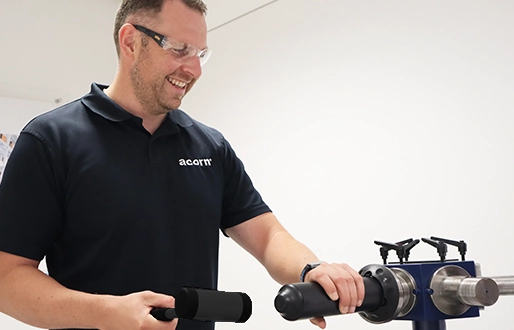
When it comes to bearing installation, using the right method is critical. A poor fitting technique can damage the bearing itself, as well as the shaft or housing it is being mounted into. In many cases, that damage is not immediately visible. The bearing may appear to be fitted correctly, but hidden marks, distortion, or contamination can shorten service life and lead to premature failure.
Discover the top 5 reasons for premature bearing failure and how to prevent them
Maintenance teams often face a wide choice of mounting methods, and it can be difficult to know which approach is best for a specific machine or bearing. However, some commonly used methods can create more problems than they solve. Using hammers, excessive force, oil baths, or open flames may seem convenient, but these practices can be unsafe and can cause long-term damage to surrounding components.
To protect both the bearing and equipment, it is essential to use the correct fitting tools. Proper installation methods help maintain the integrity of the shaft and housing, reduce the risk of bearing damage, and support longer asset life. They also help cut unplanned downtime by improving reliability from the moment the bearing is installed.
Why installation method matters
Incorrect bearing installation can lead to several issues, including:
- Scoring or deformation of the shaft
- Damage to the house bore
- Indentation on the bearing raceways
- Contamination entering the bearing during fitting
- Reduced bearing performance and early failure
Even a small installation error can ripple through the machine. What starts as minor damage can later lead to vibration, noise, overheating, and unexpected maintenance costs.
Fitting Tools
Fitting tool kits are designed to apply force evenly and accurately when mounting bearings onto shafts or into housings.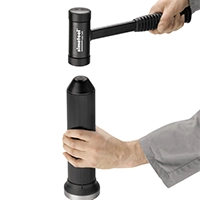
The correct impact ring is selected according to the bearing size and application. This helps ensure that force is applied only to the correct bearing ring during installation. For example, when fitting a bearing onto a shaft, force should be applied to the inner ring. When fitting a bearing into a housing, force should be applied to the outer ring. Applying force through the wrong ring can transfer load through the rolling elements, which may damage the raceways and reduce bearing life.
Because fitting tools distribute force in a controlled way, they help prevent damage to the bearing, shaft, and housing during installation. This method is especially useful for smaller bearings and for applications where precision is important.
Fitting tool kits such as the simatool fitting tools are available in a range of sizes to suit different bearing diameters. A typical kit includes an impact sleeve, multiple impact rings, and a dead-blow hammers, allowing maintenance teams to select the correct combination for the bearing being installed.
Bearing Heaters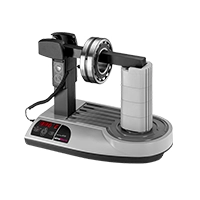
For larger bearings, heating is often the safest and most effective installation method. Bearing heaters work by generating an alternating electromagnetic field, which induces heat directly into the bearing. This allows the inner ring to expand in a controlled manner, making it easier to slide the bearing onto the shaft without excessive force.
Once the bearing cools, it contracts and creates a secure fit on the shaft. This process reduces the risk of shaft damage and avoids the need for impact-based installation methods.
Watch the full video on how to install a bearing using a bearing heater
Induction heating offers a more controlled and consistent approach than older methods such as oil baths or open flames. It is cleaner, safer, and better suited to modern maintenance environments. It also helps ensure the bearing is heated evenly, reducing the risk of overheating or material damage.
Bearing heaters are ideal for mounting larger bearings and are commonly used in industrial maintenance applications where speed, safety, and precision are all important. Depending on the heater model, they can be suitable for bearings up to 640mm in diameter or weighing as much as 300kg.
Best practice for bearing installation
To avoid damage during installation, maintenance teams should follow a few key principles:
- Always use the correct method for the bearing size and application
- Never apply mounting force through the rolling elements
- Avoid makeshift heating methods such as open flames
- Keep the bearing and surrounding components clean
- Use purpose-built tools to improve safety and consistency
Correct bearing installation is about more than simply getting the bearing into place. It is about protecting the shaft, housing, and bearing from avoidable damage that can reduce reliability and increase maintenance costs.
By using the right fitting tools or bearing heaters, maintenance teams can install bearings more safely, more accurately, and with less risk of long-term component damage. The result is longer asset life, improved machine performance, and fewer unexpected failures.