

Minimising Drive Failure to Maximise Productivity
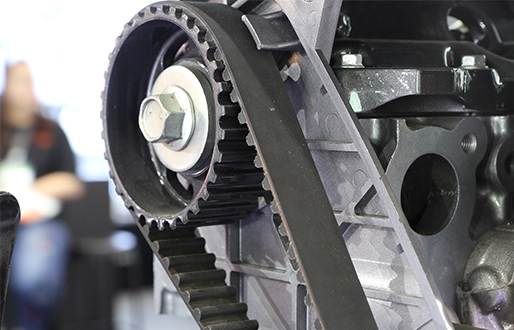
Drive failure can have a serious impact on productivity levels.
Whether it is moving a pharmaceutical line conveyor belt, a quarry jaw crusher, or keeping the operating theatre cool, they are a small yet essential part of the production process. When it comes to smooth, cost-effective operation, it’s important to get the basics right and here ACORN’s Power Transmission Product Manager talks about the top three things to consider when wanting to minimise drive failures.
read about the top 8 causes of v-belt failure
Back to basics?
I have spent the best part of 30 years in the world of power transmission, and I work with maintenance engineers, helping solve a wide range of drives problems. From providing fit-for-purpose solutions, to trouble shooting a customer’s shock load drive issues, there is always a way to minimise drive failures. In my experience, there are three things to consider when looking to promote drive longevity, and these can be summed up by going ‘back to basics’ with the belts.
Sufficient belts - Drives are the muscle behind the motor and as such the machine needs to have sufficient belts on it to do the job required of it. A significant percentage of drive failure questions that I deal with are due to the use of too few belts. There can be nothing wrong with the drive per se, but does it have the right number and type of belts on it? When I’m called in to do a drive calculation for a customer who has several belts on a drive that keep snapping or slipping, the first thing to check is the drive’s adequacy based on the motor, speeds required, pully sizes etc. This gives a strong indication if more belts are needed to make that drive fit for the intended job.
Also, installing budget priced belts can be a false economy. For example, a process might need 10 belts if fit-for-purpose options are used, or 4 premium belts – and the cost of this decision can soon become apparent if production line deliverables, or hard to reach maintenance issues are an important factor.
Correct tensioning - Choosing the best belt for the job relies primarily on getting key measurements right, such as belt length and width, pitch for timing belts, pulley diameter etc. It also involves understanding what will be expected of the belt in the form of load and speed requirements and the dust, debris, moisture, oil exposure and temperature that it will be exposed to. Of equal importance is ensuring that the tensioning of the belt is done correctly. A lot of belt failures that I deal with are because they have been tensioned by eye, rather than using an electronic tensioner. This can impact operational and cost efficiency, as it doesn’t ensure repeatability, and I would strongly argue for addition of an electronic tensioner to any maintenance engineer’s toolbox.
Paying attention to misalignment – As well as tension, misalignment of the belt can lead to premature failure. Although a certain level of misalignment can be tolerated on most drives, expecting a chain or belt to bend slightly leads to additional and unnecessary wear. Again, this can be avoided by using a laser alignment tool or metal edge, rather than the human eye, to judge accuracy. In the long run, using laser-based alignment saves set up time, reduces longer term maintenance issues and helps promote the belt’s longevity.
Navigating the variables
There are a wide range of variables when looking to keep drives moving as cost-effectively as possible and the cheapest belt isn’t always the best option. Sometimes I will see that the original drive calculation was for a premium belt, but to save money a lower priced brand has been used. However, this can be a false economy, particularly if the machine needs to perform at a certain level to meet contract fulfilment clauses, or failure isn’t an option. Also, a drive’s efficiency can be improved, and energy costs reduced if the right belt is used. This is because the drive operates more effectively with the right belt, so output can be maintained or increased using less power, subsequently saving energy and lowering bills.
When multiple drives are in use, selecting the right product can significantly amplify efficiency gains. For example, with pump drives, the correct specification can either increase throughput without raising energy use or maintain output while reducing power consumption – both outcomes lowering overall operating costs.
Asking the right questions to the right people
Looking at total cost of ownership is a good way to choose the right drive belt and here are some questions to think about before making your next purchase:
- Where are the belts or chain drives located? If it is a difficult to access area, then belt longevity is important, to reduce maintenance costs.
- Is it a critical application? If the belts need to be changed out, whether they need it or not, every six months or so to ensure that there is no drive failure for a critical use piece of equipment, then a higher level of consideration is required. An off-the-shelf product may meet basic criteria but often requires regular maintenance to reach its optimum 25,000-hour lifespan. In contrast, a fit-and-forget product line offers maintenance free operation and, in many cases, comes in a smaller, lighter form factor. This not only simplifies installation but can also reduce wear on surrounding components such as bearings, shafts, and seals, further extending equipment life.
How many and what quality of belt will deliver the outcomes needed?
To answer that last question, it is important to make the most of the experience of knowledgeable suppliers who have access to a wide range of options from many manufacturers. For example, as a complete solutions provider, the team at Acorn is used to diagnosing belt issues via images of the problem area, or depending on the need, site visits. Belt images will quickly show a straight snap due to shock load or foreign objects, fraying thanks to worn pulleys or misalignment, or if the belt has been exposed to too much back bend due to a minimum pulley diameter issue or too high an operating temperature.
Once diagnosed, the best belt for that particular job can be recommended, potentially saving money as well as easing maintenance headaches. Also, advice can be given on product crossovers, so that switch outs of belts, pulleys and sprockets can be implemented to meet tight operational deadlines.
Whether a fit for purpose or fit and forget belt is needed to keep that tractor, conveyor belt or quarry jaw crusher moving, choosing the right belt can save time and money and improve performance. So why not minimise drive failure and maximise productivity by taking some time to go back to basics?
For more information contact Acorn Industrial Services on 0800 8766 441, or email: enquiries@acorn-ind.co.uk or visit https://acorn-ind.uk/cm2