

Super Precision Bearing Tolerance Classes Explained
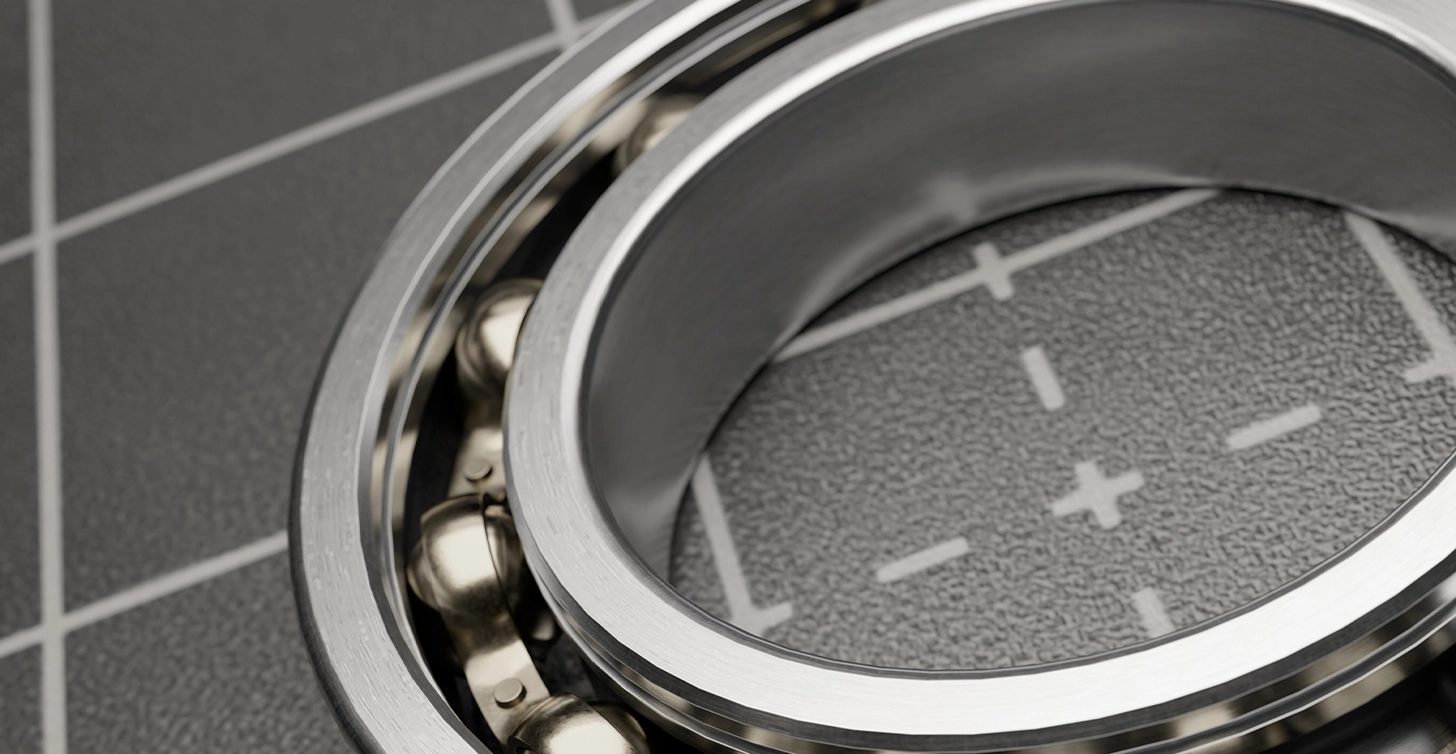
When choosing a super precision bearing, you may come across terms such as P5, P4, and P2. These are tolerance classes, and they indicate how accurately a bearing has been manufactured.
In simple terms, the tighter the tolerance class, the more precisely the bearing’s dimensions and rotation are controlled.
That can make a big difference in applications such as machine tool spindles, grinding machines and other high-speed or high-accuracy equipment. However, choosing the highest precision class available is not always necessary, or the best use of budget.
Understanding what the different classes mean can help you choose a bearing that provides the level of accuracy your machinery actually needs.
Which bearings are used for high speed?
What do super precision bearing tolerance classes measure?
No manufactured bearing is exactly identical to another. There will always be tiny differences in dimensions and geometry.
A tolerance class sets limits on how large those differences are allowed to be. For precision bearings, tolerances generally cover two areas:
Dimensional accuracy: how closely the physical size of the bearing matches its stated dimensions.
Running accuracy: how accurately and consistently the bearing rotates.
As you move from standard bearings towards classes such as P5, P4 and P2, these permitted variations become progressively smaller.
This does not necessarily mean that a P2 bearing is a ‘better’ bearing than a P4 bearing. It simply means it has been manufactured to tighter accuracy limits.
Dimensional accuracy vs running accuracy
Although they are closely related, dimensional accuracy and running accuracy describe slightly different things.
Dimensional accuracy
Dimensional accuracy relates to measurements such as: bearing bore, outside diameter, width of the bearing, size and shape of the inner and outer rings.
These dimensions are important because they determine how the bearing fits onto the shaft and into the housing.
In general industrial machinery, a very small variation may have little effect. In a high-precision spindle, however, even a small difference can affect the bearing fit, preload and ultimately how accurately the shaft rotates.
Running accuracy
Running accuracy describes how accurately the bearing rotates.
A precision bearing should rotate around its intended centreline with as little unwanted movement as possible.
This is particularly important in machine tools. If a spindle or cutting tool does not rotate accurately, the movement can affect machining accuracy, surface finish and repeatability.
What is bearing runout?
One of the most common terms used when discussing precision bearings is runout. Runout simply describes how much a rotating part moves away from its ideal position as it turns.
There are two main types: radial and axial runout.
Radial runout is unwanted movement from side to side as the bearing or shaft rotates. In a precision machining application, excessive radial runout can contribute to: inconsistent machining, poorer surface finish, increased vibration, uneven loading on the bearing, and reduced repeatability.
Axial runout is unwanted movement along the direction of the shaft. It is particularly important in applications such as grinding machines, rotary tables and other equipment where the position of a rotating surface needs to remain extremely consistent.
What do P5, P4 and P2 mean?
Bearing manufacturers commonly use tolerance classes including P5, P4 and P2. The general rule is simple: the lower the number, the tighter the tolerance.
Download the ultimate guide to bearing tolerance class chart
P5 bearings
P5 bearings offer greater accuracy than standard industrial bearings.
They can be suitable for machinery that requires better rotational accuracy or higher speeds, but where the extremely tight tolerances of P4 or P2 are unnecessary.
Typical applications can include:
- Precision electric motors
- Printing machinery
- Compressors
- Centrifugal equipment
- Less demanding spindle applications
P5 can therefore provide a useful middle ground between standard industrial bearings and full super precision classes.
P4 bearings
P4 is one of the most commonly encountered tolerance classes in super precision applications.
It provides tighter dimensional and running accuracy than P5 and is widely used in applications such as: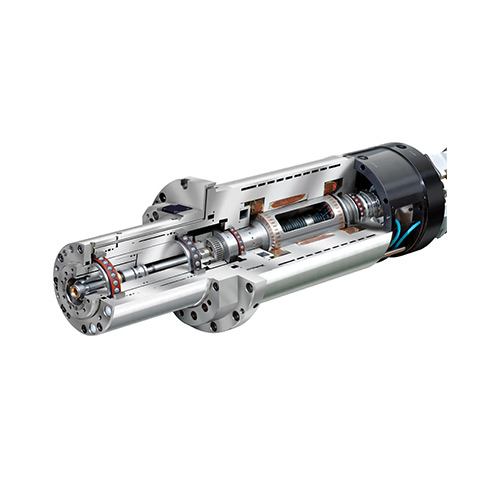
- Machine tool spindles
- Grinding spindles
- Milling machines
- High-speed machining centres
- Precision rotary equipment
For many machine applications, P4 provides an effective balance between accuracy, performance, availability and cost.
However, the tolerance class is only part of the bearing specification. Contact angle, preload, lubrication and bearing arrangement can be just as important.
P2 bearings
P2 is one of the tightest commonly used precision classes.
It provides even greater dimensional and running accuracy than P4 and is generally reserved for applications where extremely low runout and very high rotational accuracy are required.
Typical examples can include:
- Ultra-precision machine tool spindles
- High-end grinding equipment
- Measuring equipment
- Instrument spindles
- Specialist manufacturing machinery
However, not every precision application requires P2 accuracy.
In many machines, a correctly selected P4 bearing will comfortably meet the required performance.
Other designations
You may also see designations such as P4A, P4S, P3, P4Y or other manufacturer-specific codes. These are usually special tolerance classes created by individual bearing manufacturers for particular bearing ranges or applications.
They might combine, for example, P4 dimensional tolerances with tighter running accuracy. Always check what the manufacturer’s designation actually means for that particular bearing.
Why isn’t the most accurate bearing always the best choice?
It might seem logical to simply specify the highest precision bearing available. In reality, that can add unnecessary cost without improving machine performance. A bearing works as part of a complete system and is also affected by many other factors than just precision.
For example, fitting a P2 bearing into a machine where the shaft and housing are only capable of P4-level accuracy is unlikely to produce P2-level performance.
The extra bearing accuracy may therefore provide little practical benefit. The goal, therefore, is not to choose the most accurate bearing available. It is to choose one that is accurate enough for the requirement of the machine.
How to choose the right super precision bearing for your application
How does precision class affect cost?
As tolerance requirements become tighter, manufacturing and inspection become more demanding. Higher precision bearings therefore tend to cost more than equivalent bearings with wider tolerances.
Availability may also be more limited for very high precision classes. This makes correct specification important. Over-specifying a bearing can increase the purchase price without delivering a measurable improvement in the machine.
For most users, the aim should be to find the best balance between accuracy, performance, reliability and cost, rather than simply choosing the highest tolerance class available.
Which tolerance class does your application need?
There is no single tolerance class that is right for every precision application. When selecting a bearing, start with the performance the machine actually needs.
Choosing the correct super precision bearing is therefore about more than finding the tightest tolerance. The right bearing is the one that provides the accuracy your application needs while also meeting its speed, load, stiffness and operating requirements.
If you’re unsure about your machine’s requirements, get in touch with our Super Precision Division, who can help with exact bearing specifications.