

16PJ1651/650J, Gates, MICRO-V®Ribbed belt
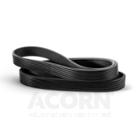

16 Rib, Rubber, Gates code : 9465-20916, EAN code: 5414465525049
16PJ1651/650J, Hutchinson, Poly-Vee Belt
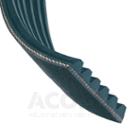

16 Rib, Rubber, Ribbed belt
16PJ1651/650J, Protorque, Poly-Vee Belt
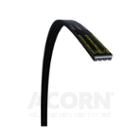

16 Rib, Rubber, Ribbed belt
16PJ1663/655J, Gates, MICRO-V®Ribbed belt
16 Rib, Rubber, Gates code : 9465-20944, EAN code: 5414465525056
16PJ1663/655J, Hutchinson, Poly-Vee Belt
16 Rib, Rubber, Ribbed belt
16PJ1752/690J, Gates, MICRO-V®Ribbed belt
16 Rib, Rubber, Gates code : 9465-20972, EAN code: 5414465525230
16PJ1854/730J, Gates, MICRO-V®Ribbed belt
16 Rib, Rubber, Gates code : 9465-21000, EAN code: 5414465525247
16PJ1854/730J, Hutchinson, Poly-Vee Belt
16 Rib, Rubber, Ribbed belt
16PJ1895/746J, Gates, MICRO-V®Ribbed belt
16 Rib, Rubber, Gates code : 9465-21028, EAN code: 5414465525612
16PJ1910/752J, Gates, MICRO-V®Ribbed belt
16 Rib, Rubber, Gates code : 9465-21056, EAN code: 5414465525629
16PJ1930/760J, Gates, MICRO-V®Ribbed belt
16 Rib, Rubber, Gates code : 9465-21084, EAN code: 5414465525636
16PJ1956/770J, Gates, MICRO-V®Ribbed belt
16 Rib, Rubber, Gates code : 9465-21112, EAN code: 5414465525643
16PJ1981/780J, Gates, MICRO-V®Ribbed belt
16 Rib, Rubber, Gates code : 9465-21140, EAN code: 5414465525650
16PJ1992/784J, Gates, MICRO-V®Ribbed belt
16 Rib, Rubber, Gates code : 9465-21168, EAN code: 5414465525667
16PJ1992/784J, Hutchinson, Poly-Vee Belt
16 Rib, Rubber, Ribbed belt
16PJ2019/795J, Hutchinson, Poly-Vee Belt
16 Rib, Rubber, Ribbed belt
16PJ2083/820J, Gates, MICRO-V®Ribbed belt
16 Rib, Rubber, Gates code : 9465-21196, EAN code: 5414465525827
16PJ2083/820J, Hutchinson, Poly-Vee Belt
16 Rib, Rubber, Ribbed belt
16PJ2210/870J, Gates, MICRO-V®Ribbed belt
16 Rib, Rubber, Gates code : 9465-21224, EAN code: 5414465525971
16PJ2337/920J, Gates, MICRO-V®Ribbed belt
16 Rib, Rubber, Gates code : 9465-21252, EAN code: 5414465525988
What is a poly belt?
The Poly Belt, or Ribbed Belt, has longitudinal v-shaped ribs running along the inside of the belt. These ribs provide a larger contact area, increasing friction force between the pulley and the belt. This enables the belt to transmit more power when compared to an identically sized flat belt or rubber belt.
The compact nature of the belt makes it ideal for high speed drives which are limited in terms of space. These belts also have a high level of efficiency, reducing the amount of energy that is lost within the drive.
Invented by Hutchinson Belt Drive Systems, the Poly belt comprises a number of ribs made from a compound of high-abrasion-resistance elastomer, geometrically optimised for maximum contact with the pulley.
A polyester or aramid cord runs through the belt for strength, whilst the reinforced rubber backing protects the cord and the radial stability of the belt. The rubber backing can also be used to transfer power onto a smooth pulley. This combination of design features and materials allows the Poly belt to counter-bend, enabling a single belt to drive several accessories from both sides of the belt.
Benefits of a poly belt
A significant benefit of the Poly belt is its compactness. With a larger contact surface area than that of the traditional V-belt or Flat Belt, the Poly belt can operate at a minimum pulley diameter of just 9mm, compared to a minimum pulley diameter of 50mm with a traditional V-belt.
Improved transmission ratio is also possible (Poly V 1:60 vs V-belt 1:20), removing the need for stepped pulleys. In addition to these space-saving features, reduced belt width is also possible for a given geometry and the same power transfer.
The Poly belt also offers reduced noise and vibration levels. Thanks to the monobloc design, there is no need to match belts like with belts, reducing maintenance and eliminating belt differential ‘flapping’.
Add to the above the increased lifespan of a Poly belt - up to four times longer than a V-belt, and it is no surprise that the Poly belt is fast becoming the chosen belt for designers, manufacturers and industrial applications.
What options are available for poly-belts?
A number of different options are also possible:
-
Aramid cord
-
Resistant compounds to oil, ozone, or high temperature
-
Special hardness (61, 67, 73 shore A)
-
Extra thickness overbackings
-
Profiles available: PH, PJ, PK, PL and PM
-
Double-sided Poly belts can also be manufactured upon request.
Applications for a poly belt
Applications where the Poly belt excels include: Mines & Quarries, Pumps, Paper Industry, Energy, Aerospace, Timber industry, Escalators, Industrial engines, Refrigeration ventilation, Gardening equipment, and fitness equipment.
Contact your nearest Acorn branch for further details.
Poly-V® is a registered trademark.
Why choose Acorn for Poly belts?
Acorn Industrial Services is one of the UK’s leading suppliers of industrial components, with a team of experts, ready to provide advice on Poly belts alongside our broader selection.
Need support? Our specialists are available for all your needs. Check out our reviews for more information.
Poly Belts / Ribbed Belts FAQs
What is a poly belt (ribbed belt)?
A poly belt—also known as a ribbed belt or V-ribbed belt—is a power transmission belt with multiple longitudinal ribs. These ribs increase surface contact with pulleys, allowing higher power transmission with less slip.
What are the advantages of poly belts over V-belts?
Poly belts offer several benefits:
-
Higher power transmission capacity
-
Improved flexibility and reduced vibration
-
Better grip and reduced slippage
-
Longer service life
-
Quieter operation
How do I identify the correct poly belt size?
Poly belt sizing is typically defined by:
-
Rib profile (e.g., PJ, PK, PL, PM)
-
Number of ribs
-
Belt length
Always refer to the equipment manufacturer’s specifications or the belt code printed on the existing belt.