

LM6UU, THK, Linear ball bearing
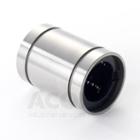

Metric, Linear bearing, Sealed
LBB 8 UU, IKO, Linear ball bearing
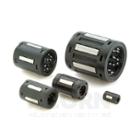

Imperial, Linear bearing, Sealed
LBBR16-2LS-HV6, Schaeffler , Linear ball bearing
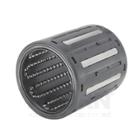

Metric, Linear bearing, Sealed, Compact ISO 1
LBBR30, Schaeffler , Linear ball bearing
Metric, Linear bearing, Compact ISO 1
LBBR6A, Schaeffler , Linear ball bearing
Metric, Linear bearing, Compact ISO 1
LBCD16D-2LS, Schaeffler , Linear ball bearing
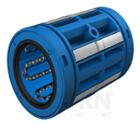
Metric, Linear bearing, Sealed, Standard ISO 3
LBCD25D-2LS, Schaeffler , Linear ball bearing
Metric, Linear bearing, Sealed, Standard ISO 3
LBCR12D-2LS, Schaeffler , Linear ball bearing
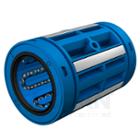
Metric, Linear bearing, Sealed
LBCR25D-2LS-HV6, Schaeffler , Linear ball bearing
Metric, Linear bearing, Sealed
LBCR50A-2LS, Schaeffler , Linear ball bearing
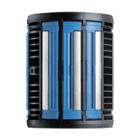
Metric, Linear bearing, Sealed
KN12-B-PP, INA, Linear ball bearing
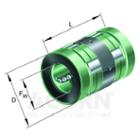

Metric, Linear bearing, Sealed
KN30-B-PP, INA, Linear ball bearing
Metric, Linear bearing, Sealed
TK25UU, NB, Linear ball bearing
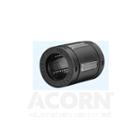

Linear bearing, Sealed
TW16UU, NB, Linear ball bearing
Linear bearing, Sealed
TW10UU, NB, Linear ball bearing
Linear bearing, Sealed
R065821240, Bosch Rexroth , Compact linear bushing

Metric, Linear bearing, Sealed, Not greased
R065821640, Bosch Rexroth , Compact linear bushing
Metric, Linear bearing, Sealed, Not greased
R065822040, Bosch Rexroth , Compact linear bushing
Metric, Linear bearing, Sealed, Not greased
What is a closed type linear ball bearing?
A closed type linear ball bearing (also known as a linear bushing) is a cylindrical bearing that runs on a round shaft. Rows of recirculating balls provide smooth, low‑friction movement while supporting radial loads.
“Closed type” means the bearing has a continuous bore and is designed for use on supported or unsupported solid shafts. (For shafts supported by a full‑length support rail, open type bearings are typically used instead.)
Closed type linear ball bearings typically offer:
- Very low friction for smooth linear motion
- High load capacity for their size
- Accurate, repeatable positioning
- Interchangeable metric and imperial sizes
- Options with seals and corrosion‑resistant materials
Choosing the right closed type linear ball bearing
When specifying a closed type linear ball bearing, consider:
- Shaft diameter (metric or imperial) and tolerance
- Required load capacity and direction of loading
- Stroke length and travel speed
- Required accuracy and rigidity
- Operating environment (dust, coolant, washdown, temperature)
- Need for seals or shields
- Shaft support (supported vs unsupported shafts, deflection limits)
- Housing type (flanged unit, pillow block, linear table, custom housing)
Our technical team can assist with selection, load checks and cross‑referencing from existing part numbers or OEM drawings.
Closed Type Linear Ball Bearings FAQs
What is the difference between closed and open type linear ball bearings?
Closed type bearings have a continuous outer and inner ring and are designed for use on solid shafts. Open type bearings have a longitudinal opening, allowing them to run on shafts that are fully supported by a support rail or profile. For fully supported shafts, open type is usually required; for unsupported or end‑supported shafts, closed type is typical.
How do I size a closed type linear ball bearing?
You’ll need the shaft diameter, load (magnitude and direction), stroke length, speed, and expected operating life or duty cycle. With this information we can recommend a suitable bearing size and quantity (e.g. number of bearings per carriage).
What lubrication do linear ball bearings require?
They require regular lubrication (oil or grease) for optimum life and performance. Frequency depends on speed, load and environment. Some units are supplied pre‑lubricated; we can advise on suitable lubricants and relubrication intervals for your application.