

Collaboration is the key to successful automation projects
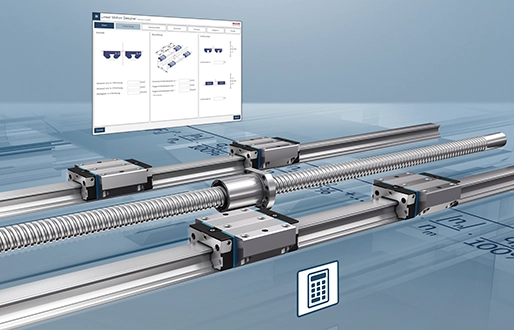
These days, balancing cost with high performing durable components isn’t enough for machine builders and design engineers, they are being required to meet customer demands for machines that are customised, integrated and delivered to ever tighter deadlines. Here Garry Haines, linear and automation manager at Acorn Industrial Services, highlights the advantages that can be gained by taking a collaborative approach to the design of modern automated systems to meet customer requirements.
Improving cost effectiveness and functionality through collaboration
With decades of experience in design and technical departments, supporting automations and linear motion systems, I have seen developments in all product areas that give improved performance functionality and cost effectiveness to the machine builder and end user. Over recent years innovations in materials, manufacturing techniques and design have led to some vast improvements in component performance and this has given machine builders a wide range of options from which to create successful projects.
The Ultimate Guide to Linear Motion and Movement
Every machine builder has challenges to overcome, even before design has started. Planning ahead and getting the right supplier support in place is key to a successful project. So, here are some of my thoughts on the top five challenges I see on a day-to-day basis for design engineers and machine builders. And how working with external suppliers can play a part in creating a more optimised machine design framework and build process.
The top 5 challenges
Here are the top challenges I see design engineers and machine builders face on a regular basis:
- Juggling money versus performance – Balancing the books has to be the biggest challenge when creating new solutions. Recent product innovations mean that new solutions may offer higher performance in smaller packages. Also, downsized or bundled solutions, optimised to work together, will reduce integration time and minimise the need for additional components.
- Meeting sustainability and energy efficiency targets – Eco-friendly and energy-efficient designs are a priority for any new machine. Component manufacturers are constantly reviewing production methods and the materials used to ensure the highest levels of sustainability. Efficient designs can be achieved through using the right components, and exploring downsizing, to ensure designs and machines are as compact and lightweight as possible, reducing the quantity of material used and saving energy whilst in operation and during transit and delivery.
- Increasing speed of time-to-market – Machine builders are under pressure to meet tighter deadlines, whilst maintaining quality. For this, the support of the supplier is crucial. A supplier who can be trusted to competently specify and supply the best solutions will be key to delivering projects in the shortest possible lead times.
- The increasing complexity of system integration - Modern machines must seamlessly integrate with existing control systems. Bundled sub-systems designed to work as a package or that have open communication protocols to easily integrate are key requirements.
- Navigating the talent shortage – Engineers need to be highly skilled in your business area and a lot of cost goes into their development to ensure and maintain a high level of expertise. Suppliers with expert knowledge can support them with ancillary systems and components, allowing them to focus on the core business requirements and giving you a greater return on your investment.
Shortcuts when creating the Machine Building Framework
Using external suppliers can help smooth the development of the machine building framework; for example, identifying and specifying plug-and-play hardware such as linear actuators, with drives, sensors, or control panels or other pre-engineered modules and components. Suppliers can also help ensure you have the correct documentation such as CE certifications, wiring diagrams and safety data, saving the design and build teams valuable time, whilst ensuring regulatory compliance. Certified suppliers have the full back up and technical resource of the manufacturers and can be a vital source of information and support for problem solving during the design, build and commissioning phases.
Other time savings come in the form of choosing pre-configured software blocks, optimised for the application or, if it suits, entire machine frameworks. This helps reduce custom coding and promotes consistency. Some manufacturers also offer virtual models or digital twins of their products to test within the machine design framework, helping ease the commissioning process.
As well as using pre-engineered parts, ready-made documentation, pre-built software blocks and virtual models, a key asset for the design engineer and machine builder has to be the expertise of the supplier. Many have deep knowledge in their area, be it automation, bearings, drives or motion control, and using this knowledge leaves designers free to work on the more complex application specific areas of the job.
Working clever – using co-design
An experienced supplier can help in the co-design element of creating the machine building framework by:
Saving money without impacting performance, whilst promoting sustainability – We often find that designers opt for a product that is oversized for the job it needs to do. Specifying a bigger part than is required costs more and has sustainability and energy efficiency implications: from a bigger footprint and heavier machinery to higher running costs. Working closely with the manufacturers, suppliers have in depth knowledge of the latest product developments and technical data to ensure that the best component is used, giving the optimal required performance.
For example, a premium product may have features and benefits over those of a standard product, with a performance level offering the advantage of downsizing. The increased cost of the part is negated by using a smaller size, plus the associated advantages of weight and energy savings. Using comprehensive sizing tools, we can also carry out lifetime calculations to match the component life to the required machine life.
Increasing speed of time-to-market – A lot of time is spent designing sections of the machine that can be supported and specified by external suppliers. For example, we have the latest manufacturer data and tools for optimal specification. This means in many cases we can supply CAD files to designers for standard and configured parts, to the desired specification, for use directly in the designs.
Simplifying system integration – Using sub systems comprising the mechanical, electrical and connection elements, takes away a lot of time and effort for designers. For multi-access cartesian systems it is possible to size and specify suitable actuators with motors, drives, brackets and cable management systems in a single part number. These are delivered fully assembled, pre-parameterised with for the installation of open communication protocols, ensuring smooth network integration and whilst reducing commissioning times.
Navigating the talent shortage – External suppliers boost the talent pool on a machine build project. We are brought in regularly on big and small jobs alike, as we have a wealth of expertise from many areas of industry, as well as specific product knowledge. This enables the designer to concentrate on other business specific areas of the machine that require more of their attention.
A key point for success for designers is early engagement with knowledgeable, certified suppliers, who have access to latest product innovations, a wide range of components from many manufacturers and can support with design, specification and optimisation for the best solutions. Whether it is a recommendation for which component will give the best performance over a given lifetime, or a replacement for a part that sees regular failures, why not use the experience and support that a reputable supplier can add, we all need a good team behind us to get the job done?
For more information contact Acorn Industrial Services on 01709 789 949, email: enquiries@acorn-ind.co.uk or visit https://acorn-ind.uk/cm1
About Acorn Industrial Services
With branches and specialist divisions throughout the UK, Acorn Industrial Services is a leading supplier of machine maintenance equipment and supporting MRO services in the UK and abroad. The company’s success has been built on its team of experts, who have years of experience in their specialist fields, enabling customers to not just buy parts or equipment but benefit from their knowledge and ability to problem solve.
Stockists of premium brands, Acorn is one of the largest stockists and suppliers of bearings and housings, linear motion systems, couplings and drives, power transmissions, maintenance equipment and lubrication products in Europe.