

5 signs that you should replace your bearings before it's too late
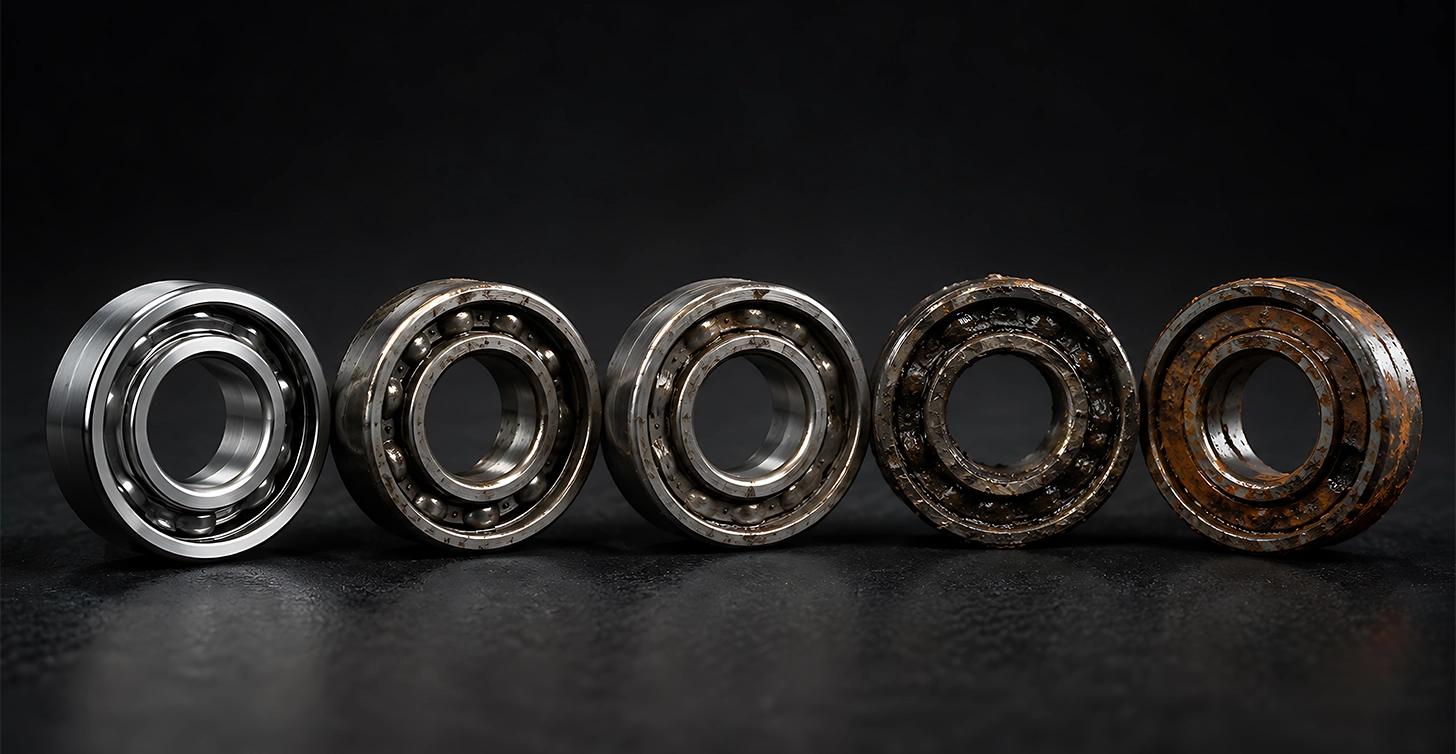
Key Takeaways:
Incorrect lubrication is responsible for 36% of bearing failures. Be aware of:
-
Insufficient Lubrication
-
Over-lubrication
-
Using the wrong type of lubrication
Bearing contamination causes 14% of bearing failures. Be aware of:
-
Incorrect seals on the bearing
-
Poorly fitted seals
-
Degradation of the seal
-
Improper bearing storage
-
Improper handling of the bearing
-
Listen out for vibrations when the bearing is in operation, which could lead to rapid failure.
-
Listen out for excessive noise, as a failure has already occurred.
-
Monitor for increased operating temperatures, which can be an early warning sign of bearing failure.
-
Incorrect mounting of bearings can lead to premature failure.
There are many ways to support the longevity of your bearing, like:
-
Ensuring the correct bearing is used.
-
Performing regular checks.
-
Use a bearing fitting tool or bearing heater to mount it.
-
Storing and handling the bearing safely.
-
Use an appropriate sealing solution.
-
Checking for signs of misalignment or degradation.
-
If your bearing fails and you don’t know why, send it to a bearing expert for root cause analysis.
Lubrication
Be aware of incorrect bearing lubrication
With 36% of bearing failures attributed to issues with lubrication, it’s well known that using the wrong type or quantity of lubricant can lead to bearing failure. Knowing how to care for your bearings can make a huge difference when it comes to avoiding bearing failure caused by improper lubrication.
There are a few different ways in which bearing failure can result from lubrication:
-
Insufficient lubrication - If your bearing does not have enough lubricant, or you do not apply lubricant often enough, it could run hot and eventually seize. This is because bearings rely on a certain amount of oil to perform effectively. If there isn't enough oil in your bearing, it can seize - causing dangerous conditions and leading to costly downtime for your machine.
-
Over-lubrication - Over-lubricating your bearing can also cause problems. It seems counterintuitive, but excess lubrication can cause leakage through the bearing's seal. This can cause the seal to become compromised, allowing the ingress of contamination into the bearing and leading to its ultimate failure.
-
Wrong type of lubricant - There are many different types of lubricants on the market, from oils to greases. It's essential that you choose the correct type of lubricant for your operating conditions, or you could risk compromising your bearing. For example, if the bearing is located within an oven, you will need to choose a grease or oil that is designed to withstand high temperatures.
Contamination can also occur during relubrication when foreign particles become stuck to the end of the grease gun, entering the bearing.
If you become aware that the wrong type of grease has been applied to a bearing, failure may likely have already occurred. Similarly, if the bearing has been running dry due to a lack of lubrication or grease has leaked through the seal due to over-lubrication, likely, the damage has already been done.
Adding grease to a bearing which is suffering from issues due to lubrication problems may seem like a good fix. In fact, it’s only masking the issue. You’ll need to determine the severity of the problem using data such as temperature and vibration, and replace the bearing before it leads to catastrophic failure.
Check out our lubrication range here
Contamination
Watch out for Bearing Contamination
A further 14% of bearing failures are caused by contamination. It could be that high-pressure washdowns have emulsified the grease, rendering it ineffective. This leads to metal-to-metal contact within the bearing, generating heat and friction.
Inefficient seals can also lead to particle contamination, spoiling the grease. This particle contamination may also be abrasive, causing damage to the surface of the bearing raceways.
There are a few ways in which your bearing could become contaminated:
Incorrect seal - One of the most common reasons for a bearing becoming contaminated is an incorrect seal being used. It could be that your seal isn't sufficient for the levels of contamination being experienced, or that it isn't suitable for the speed, temperature or load of the application. The seal should be inspected at regular intervals to ensure that it fits the bearing properly and has not begun to degrade.
Poorly fitted seal - If a seal doesn't fit properly, there will be a small gap that allows the ingress of contamination into the bearing.
Degradation of seal - When a seal becomes old, or if it becomes compromised as a result of extreme temperatures or abrasive contamination, it may begin to degrade. This could enable contamination to enter the bearing, eventually leading to premature bearing failure.
Improper storage - It's also essential that you store your bearing according to the manufacturer's instructions. This typically means keeping your bearing in its original packaging in a cool, dark room until you are ready to fit it to your machinery.
When your bearing is being stored and handled, it is at its highest risk for being exposed to contaminants such as dust or dampness. If due care is not taken, it could also risk being damaged by being knocked or dropped. This could lead to the bearing failing prematurely due to damage sustained or contamination that has entered the bearing.
Properly storing your bearing and ensuring that it is handled carefully at all times will help it to achieve its full service life, avoiding premature failure as a result of improper handling or storage.
Improper handling - It's important that bearings are handled carefully during the mounting process, with due care taken to avoid any contamination entering the bearing. It is also essential that the equipment used for mounting the bearing has been thoroughly cleaned to prevent contamination.
The best way to avoid your bearing failing as a result of contamination is to follow the manufacturer's instructions carefully when it comes to storing the bearing and to handle it carefully during the mounting process to avoid any potential contamination.
If you are aware that contamination has occurred within your bearing, it’s wise to replace the bearing as soon as possible. The chances are, failure has already occurred, and it’s only a matter of time before this leads to further issues within your machinery.
Vibration
Check for vibrations
A sure sign that your bearing has failed is vibration. If the raceway surface of the bearing becomes damaged by abrasion, the rolling elements (the balls or rollers) will bounce around on the raceway surface during operation, causing high levels of vibration.
If you notice your bearing suddenly vibrating during operation, it’s time to replace it. If not, you could find that catastrophic failure is not far away, causing you excessive downtime and high costs.
Excessive noise
Listen out for excessive noise
If your bearing is suddenly noisy during operation, you’re looking at a bearing failure. This excess noise is created when the raceways of the bearing have become damaged, causing the rolling elements to bounce or rattle during rotation.
If you notice your bearing making excessive noise while it’s running, you’ll need to replace it as soon as possible. The failure has already occurred within the bearing, and a machine breakdown could happen at any moment.
Increased operating temperature
Monitor for increased operating temperature
When the rolling elements of a bearing run on damaged or unlubricated raceways, this will result in excessive friction. This friction generates energy, which causes the temperature of the bearing to elevate. The more significant the damage, the higher the temperature will become due to the levels of friction present.
Regularly checking the temperature of your bearings can alert you to a bearing failure, which needs to be dealt with as soon as possible.
It’s important not to just replace a bearing but to look for the root cause of the failure. Performing effective root cause analysis can allow you to put mitigating measures in place to avoid future bearings meeting the same fate, further downtime and additional costs to your business.
Condition monitoring systems are a great way to continuously monitor the health of your machinery during operation, alerting you to potential issues. This can give you time to remedy the problem, preventing failure from occurring.
At ACORN, we supply the SKF range of condition monitoring equipment, from stroboscopes and vibration sensors to full condition monitoring systems which integrate seamlessly with your machinery for remote monitoring.
Other issues to be aware of that may affect your bearing’s longevity
Incorrect mounting
 Approximately one-sixth of all premature bearing failures are the result of incorrect mounting practices. This is because bearings commonly become damaged during the fitting process, causing them to fail prematurely.
There are three different ways in which a bearing can be safely fitted:
Mechanical - Using a bearing fitting toolkit
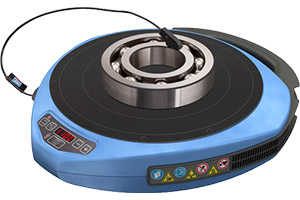
Heat - Using a bearing heater
Oil - Using oil injection techniques
Mechanical fitting methods can be both safe and effective if done correctly. This means using a bearing fitting toolkit such as SKF's TMFT 36 to ensure that force is applied evenly across the bearing and that damage does not occur during the mounting process.
Brute force is often used when fitting bearings. However, this frequently leads to force being applied unevenly to the bearing, resulting in damage occurring. Although you may not notice this damage during the mounting process, this damage could lead to the bearing's premature failure later down the line.
Heat is a highly effective method for mounting bearings. However, bearings should be heated using a bearing heater, rather than a naked flame or oil bath. This is because the bearing is often heated unevenly when a naked flame or oil bath is used, leading the bearing to become damaged during the fitting process. Flames and oil baths can also lead to severe injuries for the engineers involved.
Selecting an appropriate mounting method for your bearing can help to prevent any damage being inflicted on the bearing that might later cause its premature failure, as well as help to keep your workers safe.
How to avoid bearing failure
Whilst bearings will inevitably fail at the end of their service life, premature bearing failure is unfortunately a common occurrence that can be prevented with the right knowledge.
To give your bearings the best chance of achieving their full service life, there are a few steps that you can follow:
-
Ensure that you specify the correct bearing for your application requirements as well as the environment in which it operates.
-
Regularly check that you're still using the most appropriate bearing for the operating conditions.
-
Use a safe and effective method for mounting your bearing, such as using a bearing fitting toolkit or a bearing heater.
-
Store and handle your bearings carefully, in accordance with the manufacturer's instructions.
-
Ensure that you are using the most appropriate sealing solution for your application, and regularly inspect the seal for signs of degradation or misalignment.
-
Check that you are using the most appropriate lubricant for the application, as well as the operating environment.
-
Regularly inspect the bearing for any signs of wear or damage. If the bearing appears damaged, replace it at the soonest opportunity to avoid catastrophic failure.
-
When a bearing fails prematurely, inspect it for any visible damage and consider sending it to a bearing expert for root cause analysis. Of course, you can’t save the bearing after it has failed, but finding out the cause of the problem could help you to avoid future failures and downtime.
In summary
Premature bearing failure is a common problem in industry, but the majority of the time, it can be prevented by following the tips above.
If you're unsure of how to keep your bearings operating at their best, it's best to seek advice from a bearing expert. They will be best placed to offer advice on maintaining your bearings and reducing your risk of premature bearing failure.
For extended reading on bearing failure, be sure to read our bearing failures PDF.
Get in touch
Speak to Acorn Industrial Services about replacing your bearings
Acorn Industrial Solutions is one of the biggest suppliers of industrial bearings in the UK, and stocks all well-known bearing brands, from SKF to FAG to NSK.
Click through our selection of Bearings, or if you know what you need, use the Search Function to take you directly to it.
If you’re unsure or need advice, a member of our team will be more than happy to help.
FAQ
How do I know when to replace bearings?
Look for issues with noise, vibration, heat, or lubrication issues. If you spot any issues with performance, you should investigate.
FAQ
What are the earliest signs that bearings need replacing?
Keep an eye out for issues like grinding, even if only lightly, spikes in temperature, and debris in grease.
FAQ
Can I extend bearing life with lubrication alone?
No. While good lubrication helps to support the longevity of bearings, making sure it’s properly aligned in a clean environment and is working with acceptable loads is also needed.
FAQ
What can cause sudden industrial bearing failure?
Key causes of sudden bearing failure include:
-
Contamination
-
Over-loading
-
Poor lubrication
-
Improper installation
FAQ
What are the standard bearing replacement intervals for factories?
Typical intervals for bearing replacement vary from application to application. In general, though, bearings are replaced every 6-12 months, with some lasting up to 24 months.
FAQ
Should I use sensors for predictive maintenance of bearings?
Yes, particularly if your equipment is critical or high-speed. Your sensor will help you to determine when to replace bearings, saving costly downtime.