

Causes of Motor Failure and How to Prevent Them
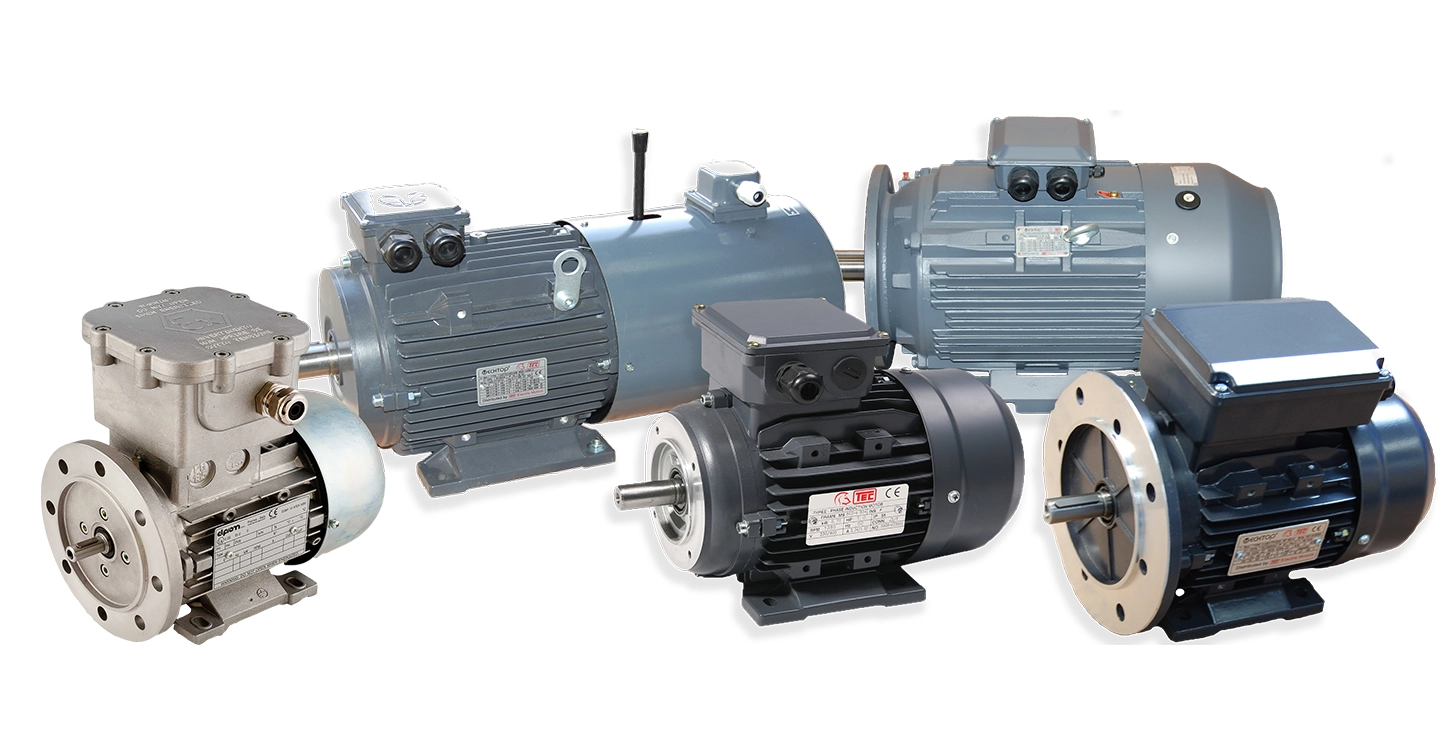
A well-maintained electric motor typically runs for 30,000 to 40,000 operating hours before it reaches the end of its service life, according to the US Department of Energy's motor life guidance. Without proper maintenance, that figure drops sharply.
Most motor problems can be traced to a handful of specific causes of motor failure, but they don't all carry equal weight. Bearing failure and insulation breakdown together account for the large majority of motor failures, with EASA's root cause failure analysis research consistently identifying bearings as the single most common point of failure.
Understanding which of these seven causes is behind a specific failure, rather than guessing at the nearest visible symptom, will give you the best chance of actually extending a motor's working life.
See our full range of electric motors here
Key Information
-
Bearing failure is the most common cause of motor failure, cited across EASA and IEEE industry surveys, ahead of insulation and winding failure.
-
A well-maintained motor typically lasts 30,000 to 40,000 running hours, per US Department of Energy guidance; poor maintenance shortens this considerably.
-
This guide covers seven distinct causes: bearing failure, low resistance (insulation breakdown), electrical overload, voltage imbalance, overheating, contamination, and vibration and misalignment.
-
Many motor failures are preventable through regular insulation testing, correct lubrication, and routine vibration checks.
-
A sudden stoppage doesn't always mean the motor itself has failed. Check the power supply and thermal protection before assuming the worst.
-
A proper failure analysis, rather than replacing the first suspect part, is what actually stops a failure from recurring.
1. Bearing Failure
Bearing failure is the most common cause of motor failure and is responsible for roughly 40 to 50% of failures according to EASA and the IEEE-IAS large motor reliability survey.
Be wary, though, as issues rarely appear as a bearing problem at first. Increased noise, heat, and vibration usually show up before the bearing itself is inspected, and as such, it’s often mistaken for a separate issue.
The underlying causes are well understood:
-
Incorrect or degraded lubrication, including over-greasing, under-greasing, or mixing incompatible greases.
-
Contamination from dust, moisture, or process chemicals entering the bearing housing.
-
Misalignment or imbalance, which loads the bearing unevenly.
-
Shaft voltage, where induced currents pit and groove the bearing races.
-
Normal fatigue, once a bearing simply reaches the end of its rated life.
Possible solution: Follow the manufacturer's lubrication schedule exactly, keep bearing housings sealed against contamination, and check alignment whenever a motor is reinstalled or reconnected to a load.
Be sure to view our bearings range, which covers replacement and upgrade options across the major brands. You can also view our guide on choosing the right super precision bearing, which covers selection in more depth.
2. Low Resistance (Insulation Breakdown)
Low resistance is the next most common cause of motor failure, cited at roughly 20 to 30% of failures by the same EASA and IEEE-IAS research. It is often the hardest to catch early.
Low resistance is caused by degradation of the winding insulation, driven by overheating, corrosion, or physical damage. Once the insulation breaks down, conductors that should be isolated from each other are no longer properly separated, which leads to leakage current, short circuits, and eventual failure.
Possible solution: Test insulation resistance regularly with a megohmmeter rather than waiting for a visible fault, and replace insulation showing early signs of wear before it fails in service.
3. Electrical Overload
Electrical overload happens when current flow through the motor windings exceeds the design current the motor can carry safely. A low supply voltage is a common trigger, since the motor draws more current to maintain torque.
Short-circuited conductors and excessive voltage supply can also push a current beyond safe limits.
Possible solution: Install a thermal overload relay sized to the motor's nameplate current rather than an estimate. Under IEC 60947-4-1, a correctly set relay must not trip within two hours at 105% of full-load current but must trip within two hours once current reaches 120%, which gives enough headroom for a normal starting current while still catching an overload before it damages the windings.
4. Voltage Imbalance and Poor Power Quality
This is a distinct issue from overload, and one that's easy to miss because it isn't tied to how hard the motor is working. Transient voltage spikes, phase imbalance across a three-phase supply, and harmonic distortion can create excessive internal heat, which can cause mechanical vibrations and degrade insulation over time, regardless of the load the motor is carrying.
NEMA MG-1 permits motors to run at rated load with up to 1% voltage unbalance before derating is needed. Beyond that threshold, the resulting current imbalance runs roughly 6 to 10 times the voltage unbalance itself, resulting in damage to the motor. This is why NEMA does not recommend operating a motor above 5% unbalance at all.
Possible solution: Check supply quality with a power quality analyser or a clamp meter with a phase-balance function, particularly on motors that fail repeatedly without an obvious mechanical cause.
5. Overheating
Overheating is a major issue and causes insulation failure. Its effect on motor life can be precisely quantified, which can make it easier to diagnose this issue.
The relationship is known as the 10°C rule (or Montsinger's rule): for every 10°C a motor's operating temperature rises above its rated limit, insulation life is roughly halved. This relationship is formalised in NEMA MG-1 thermal life calculations, which is why even a modest, sustained temperature rise, most often driven by poor power quality or a high-temperature operating environment, can cause disproportionate long-term damage.
Possible solution: Keep the operating environment as cool as is practical and confirm cooling fans and airways are unobstructed. You should also treat any sustained temperature rise as a signal to investigate rather than something to work around.
6. Contamination
Contamination from dust, dirt, and chemicals accelerates both bearing wear and overheating. Foreign material that finds its way inside the motor can dent bearing raceways and balls, increasing vibration and wear. It can also block the cooling fan, limiting the motor's ability to regulate its own temperature.
Possible solution: Keep work areas, tools, and fixtures clean, and position motors away from grinding machines or other equipment that generates airborne contaminants. Our lubrication range includes sealed and contamination-resistant options where the operating environment can't be kept fully clean.
7. Vibration and Misalignment
Vibration can cause a motor to fail well before the end of its expected service life, and it's often a symptom of an underlying mechanical issue rather than a standalone problem. An uneven or unstable mounting surface is a common trigger, and loose bearings, shaft misalignment, and corrosion are also common. Each of these issues will continue to accelerate wear until it's corrected.
Possible solution: Check motors regularly for vibration using a dedicated tool such as the SKF CMDT Plug & Play machine condition indicator. Confirm the motor sits on a flat, stable surface, then check for loose bearings or misalignment if vibration persists. Where the source isn't obvious, our maintenance equipment range covers the diagnostic tools needed to isolate it, or our engineers can help directly.
How to Carry Out an Electric Motor Failure Analysis
Replacing the first suspect part after a failure often means the same failure recurs within weeks. A short, structured process finds the actual root cause instead, broadly following the methodology EASA sets out for root cause failure analysis:
-
Record the motor's operating history and nameplate data before doing anything else. Load, run hours, recent maintenance, and any recent changes to the application are all relevant.
-
Carry out a visual inspection of the windings, bearings, and terminal connections for scorching, discolouration, physical damage, or contamination.
-
Test insulation resistance with a megohmmeter to confirm whether winding insulation has degraded.
-
Check for vibration and misalignment using a vibration analyser, since mechanical faults frequently precede and cause the electrical fault that's visible on the surface.
-
Inspect the bearings directly, since bearing wear is the most common root cause, per EASA, and is often the true origin of a fault that first presented as overheating or a winding failure.
-
Match the pattern found against the seven causes above, rather than assuming the most visible symptom is the root cause.
-
Correct the underlying issue, not just the failed component, before the motor goes back into service.
Discuss your motor failure with an expert from the Acorn Industrial Services Team
Acorn Industrial Services has a team of experts ready to support you with issues and maintenance related to your machinery, including motors.
Speak to a member of our team today or read our Motor Services page next. If you need parts, be sure to view our Electric Motor and Machine Condition Indicators.
Frequently Asked Questions About the Causes of Motor Failure
What is the most common cause of motor failure?
Bearing failure is the most common cause of motor failure, cited at roughly 40 to 50% of failures in the EASA and the IEEE-IAS large motor reliability surveys. Insulation and winding failure is the second most common cause, at roughly 20 to 30%.
What is motor burnout?
Motor burnout describes insulation failure severe enough that the winding conductors short-circuit against each other, often producing visible heat damage or a burning smell. It's the end stage of a process, usually driven by sustained overheating, that starts long before the motor visibly fails.
Catching the early signs (rising operating temperature, discolouration, or a drop in insulation resistance) prevents it from reaching this point.
What causes low resistance in an electric motor?
Low resistance is caused by degradation of the winding insulation, most commonly from overheating, corrosion, or physical damage to the insulation material. As the insulation weakens, it no longer properly isolates the conductors from each other, which allows leakage current to flow and eventually leads to a short circuit.
What should I do if my electric motor suddenly stops working?
-
Check the power supply first: confirm there's no tripped breaker or blown fuse before assuming the motor itself has failed.
-
Next, check for a thermal overload trip, since many motors shut down automatically once they overheat. On single-phase motors, check the capacitor and starter.
-
If the motor still won't run, inspect for a mechanical jam or a seized bearing before isolating the supply and calling in a specialist.
How long should an electric motor last?
A well-maintained motor typically lasts 30,000 to 40,000 operating hours, per US Department of Energy guidance on motor life. Actual lifespan depends heavily on maintenance quality, operating temperature, and load, and can fall well short of this range where any of the seven causes above go unaddressed.
What is single phasing, and why does it damage a motor?
Single phasing occurs when a three-phase motor loses one of its three supply phases, usually from a blown fuse or a failed contactor, while the motor keeps running on the remaining two. This forces those two phases to carry a current increase of around 173%, according to Eaton's motor protection guidance, which rapidly overheats the windings and can lead to burnout within hours if the motor isn't disconnected in time. It's a particularly damaging form of voltage imbalance precisely because standard protection devices don't always catch it quickly enough.
What is a good insulation resistance reading for a motor?
-
For windings rated below 1kV, IEEE Standard 43 sets a minimum acceptable insulation resistance of 5 megohms, corrected to 40°C.
-
Older or random-wound windings follow a simpler rule of thumb: the rated voltage in kV plus 1, expressed in megohms, so a 460V motor should read at least 1.46 megohms.
-
Modern form-wound windings built after 1970 are held to a much higher bar of 100 megohms, since a clean, dry modern insulation system should read far above the older minimums. A reading below the relevant threshold means the motor shouldn't be re-energised until the underlying insulation issue is corrected.
What are the warning signs that a motor is about to fail?
A motor rarely fails without warning. Watch for:
-
Unusual noise, such as grinding or knocking, which usually points to bearing wear.
-
Rising operating temperature or a burning smell, both signs of insulation stress.
-
Increased vibration, often linked to misalignment or early bearing wear.
-
A drop in insulation resistance on routine testing, sometimes before any other symptom appears.
Any one of these on its own is worth investigating. Together, they're a strong signal that a failure is close, and it's better to schedule the repair than wait for the motor to stop.
Can a motor be repaired after burnout, or does it need replacing?
It depends on where the damage sits and the motor's size.
-
Motors with electrical damage confined to the windings, where the core and frame are undamaged, can usually be rewound to the original specification.
-
Bearing failures caught early are often a straightforward in-place repair.
-
Once core lamination damage or extensive rotor bar failure is involved, or on smaller motors where new-unit pricing already includes updated protection and fresh bearings, replacement is typically better value.
A proper failure analysis, as set out above, is what tells you which situation you're in before committing to either option.
What temperature is too hot for an electric motor?
Motor windings are built to a specific insulation class, and each class has a fixed thermal ceiling: Class B is rated to 130°C, Class F to 155°C, and Class H to 180°C, per NEMA's motor standards guidance.
These ratings already assume the motor's normal temperature rise above a 40°C ambient, so a Class F motor running at 155°C under full load is operating as designed, not overheating. The real risk is running consistently above the rating for the fitted insulation class, since that's exactly when the 10°C rule above starts cutting into the motor's expected working life.
Why does my motor keep tripping the overload?
A relay that trips repeatedly is usually reporting a genuine problem rather than a fault of its own.
Work through it in order:
-
Confirm the relay is sized to the motor's actual nameplate current rather than an estimate.
-
Check whether a worn bearing or a developing misalignment is forcing the motor to work harder than its rated load.
-
Rule out voltage imbalance or single phasing, both of which push current higher on one or more phases without necessarily changing how the motor sounds or feels.
Repeated tripping with no obvious mechanical cause points to an electrical supply problem more often than it points to the motor itself.
What's the difference between vibration from misalignment vs. bearing wear?
The two produce distinct vibration signatures.
Misalignment typically shows up at the motor's running speed and its first harmonic (1x and 2x), often with a pronounced axial component alongside the usual radial vibration.
Bearing wear shows up at frequencies tied to the physical geometry of the bearing itself, the ball pass frequencies of the inner and outer races, which don't correspond to simple multiples of running speed and usually sit much higher up the spectrum.
A vibration analyser that reads frequency rather than just overall amplitude can distinguish the two directly, rather than leaving it to guesswork.
How often should electric motors be serviced or inspected?
Annual insulation resistance testing is the general baseline for most motors, per EASA's guidance on preventive and predictive maintenance.
Motors in harsh environments, or critical to production, warrant more frequent checks. Monthly or continuous vibration monitoring is common for critical motors since it catches bearing wear and misalignment well before either would show up in an annual electrical test.