

5 Ways to Keep Production Moving in the Food & Beverage Industry
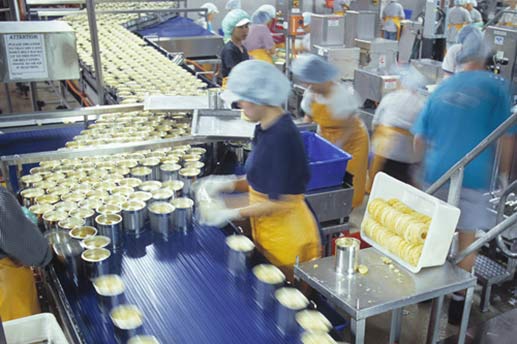
Food and beverage manufacturers operate in one of the toughest production environments around. Equipment is expose to moisture, aggressive cleaning routines, temperature extremes, temperature extremes and contaminants, all while businesses are under constant pressure to maintain uptime, meet food safety requirements and protect product quality. Today, the challenge is not just keeping lines running. It is keeping them running efficiently and hygienically.
Find out more about the solutions we offer to the food and beverage industry here
Downtime can have a major impact on output, labour efficiency, and delivery performance, so a proactive maintenance strategy is essential. Here are five practical ways to help keep production moving in the food and beverage industry.
1. Choose components designed for food and beverage environments
Standard components can struggle in food and beverage applications, where frequent washdowns, chemical exposure and high humidity place extra strain on equipment. Choosing components designed specifically for hygienic or washdown environments can help improve reliability, reduce premature failure and support a longer service life.
When selecting bearings, chains, seals and housings, look for products developed to withstand demanding cleaning regimes and contamination risks. The right specification can make a significant difference to uptime, especially on critical production assets.
2. Move from reactive maintenance to condition-based monitoring
Modern maintenance strategies are increasingly built around condition monitoring and predictive maintenance. Rather than waiting for a failure or relying only on fixed service intervals, condition-based monitoring helps identify developing issues earlier, so maintenance can be planned before unplanned downtime occurs.
This approach can be especially valuable on critical assets such as conveyors, pumps, mixers, fillers and packaging equipment. By monitoring equipment health and turning data into action, manufacturers can reduce disruption, improve planning and make better use of maintenance resources.
3. Choose food safe lubricants
Lubrication remains a vital part of equipment reliability, but in food and beverage production it must also support compliance and contamination control. Using NSF H1 registered lubricants in areas where incidental food contact may occur helps reduce risk and supports safer operation. Many manufacturers also look for ISO 21469-certified products as part of a stronger food safety and audit-readiness strategy.
It is also important to go beyond product selection alone. Clear lubricant identification, correct storage, controlled application and documented usage all help strengthen traceability and reduce the risk of cross-contamination. In modern food production, good lubrication practice is as much about process control as product choice.
4. Automate lubrication where possible
Around 36% of premature bearing failures can be attributed to poor lubrication practices. Automatic lubrication systems can help remove inconsistency from manual lubrication practices by delivering the right amount of lubricant at the right interval. This not only supports component life but can also reduce maintenance workload and improve safety by limiting the need for manual intervention in hard-to-access areas.
This is becoming even more relevant as lubrication systems become more connected. Suppliers such as SKF now offer food and beverage lubrication solutions ranging from centralised automatic systems to newer digital options that support remote monitoring and data visibility. SKF states that automatic lubrication can improve reliability and has recently introduced connected lubricator technology with wireless data capability.
5. Use planned maintenance windows to combine service, inspection and improvement
Planned maintenance windows still play a key role, but the most effective sites now use them strategically. Instead of carrying out isolated routine risks, these windows can be used to combine inspections, lubrication, alignment checks, component replacement and follow-up work identified through condition monitoring.
This creates a more joined-up maintenance approach, helping teams reduce repeat stoppages, improve scheduling and keep critical assets in peak condition. When supported by the right data and spare parts planning, planned shutdowns become an opportunity to improve overall equipment effectiveness, not just restore it.
Keep production moving with the right maintenance strategy
Keeping production moving in the food and beverage industry requires more than responding quickly when something goes wrong. It means selecting the right components, using food-safe lubrication practices, adopting condition-based monitoring and building a maintenance strategy that supports reliability, hygiene and compliance.
By taking a proactive approach, manufacturers can reduce unplanned downtime, protect product quality and create a more resilient production operation.
For more information on improving reliability and productivity in your food and beverage application, contact our team today. (opens new window)