Acorn Industrial Services supplies a wide range of shaft collars for industrial, engineering, automation, power transmission and machinery applications. Shaft collars are used to position, locate, space, retain or secure components on a shaft, providing a simple and reliable method of mechanical fixing.
Whether you need a set screw shaft collar, clamp collar, split shaft collar or a replacement collar for an existing machine, Acorn can help you source the correct product quickly and reliably.
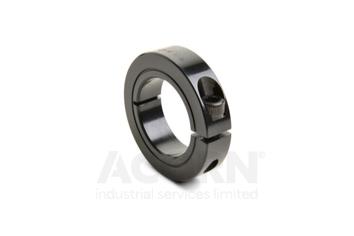
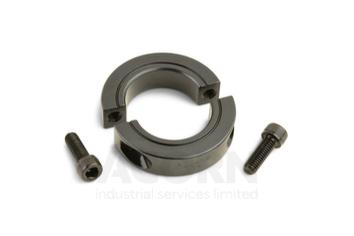
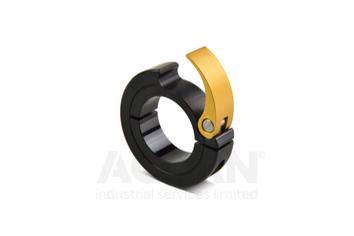
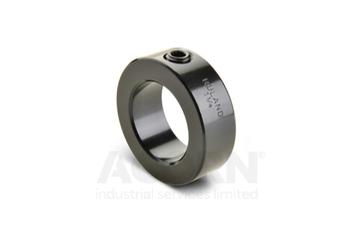


Shaft collars are commonly used in mechanical assemblies to hold components in place on a shaft. They can be used as stops, spacers, locators, bearing retainers or positioning devices in rotating and linear motion systems.
At Acorn Industrial Services, we supply shaft collars for a wide range of applications, including conveyors, automation equipment, packaging machinery, drive systems, linear motion assemblies, material handling equipment and general industrial maintenance.
Choosing the correct shaft collar depends on the shaft diameter, required holding force, material, mounting style, operating environment and whether the collar needs to be repositioned or removed easily.
Key factors to consider include:
If you are unsure which shaft collar is suitable, Acorn can help identify the correct product or recommend an alternative based on your application.
Shaft collars are used across many types of machinery and mechanical systems. They provide a simple way to hold parts in place, control movement or maintain spacing between components.
Common applications include:
At ACORN industrial services, our offerings extending beyond just shaft collars. We are committed to providing other couplings & drives products to meet your industrial needs:



Alternatives to shaft collars would be set collars, clamp collars, and split collars. Alternative means for several applications would also include the use of snap rings or set screws to locate components on a shaft.
Two-piece shaft collars are generally more secure due to their strong and even grip on the shaft. Quick-release shaft collars will also hold very securely in place with an added advantage of easy adjustment.
The strength in shaft collars emanates from the material used and the design. The simplest, basically, steel shaft collars have high tensile strength and can take considerable axial loads with very reliable performance under tough conditions.
To size up a shaft collar, measure the diameter of the shaft that you will be fastening. Collars are sized based on their inner diameter, so pick one with an inner diameter equal in size to your shaft to get good clamping force. Consider the diameter and width of the handle of the collar to make sure that it doesn't interfere with other parts of your application.