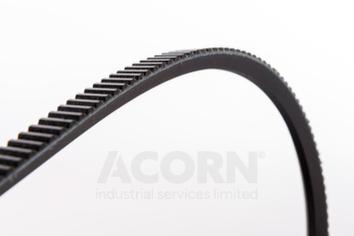
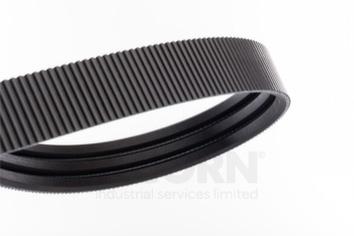
Acorn Industrial Services supplies a wide range of V belts for industrial power transmission, machinery, engineering and maintenance applications. V belts are designed to transmit power between pulleys, providing reliable drive performance in equipment such as motors, fans, pumps, compressors, conveyors and production machinery.
Whether you need a replacement V belt for urgent breakdown support, a matched belt set for a multi-belt drive or help identifying the correct belt profile and length, Acorn can help you source the right industrial belt quickly and reliably.
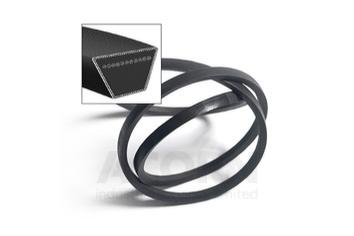
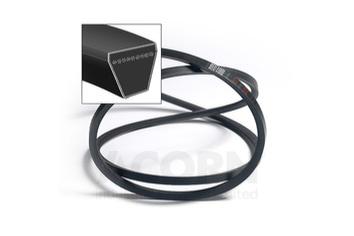
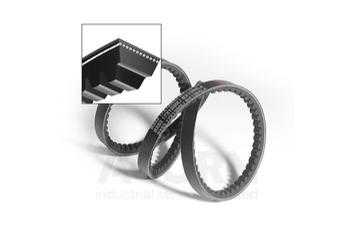
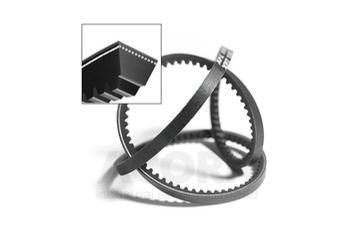
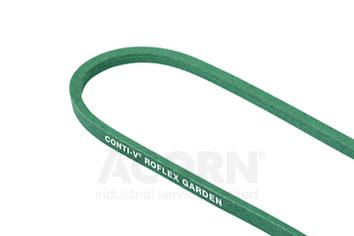
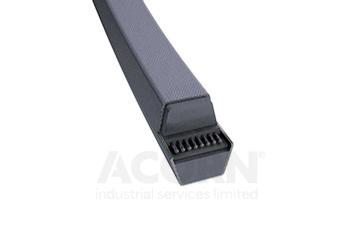
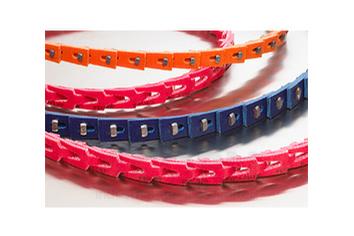
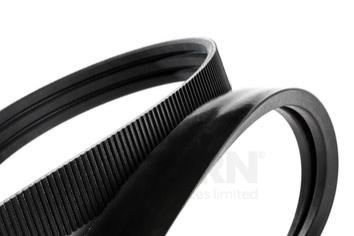


V-belts are a power transmission belt used for industrial applications. Their name derives from their V-shaped cross-section, which is designed to increase the frictional grip between the belt and the pulley walls, providing efficient power transmission without slippage.
Contact us today for more information regarding our range of V-belts.
V belts are one of the most widely used industrial belt types for power transmission. Their trapezoidal profile fits into a matching pulley groove, creating grip and helping transmit torque efficiently between rotating shafts. V belts are used across a wide range of industries because they are cost-effective, reliable and suitable for many drive configurations.
At Acorn Industrial Services, we supply V belts for manufacturing, agriculture, quarrying, food processing, packaging, HVAC, automotive, material handling and general industrial maintenance applications.
V-belts & wedge belts both come under the term friction v-belts, meaning they need tension to maintain enough friction between the pulley and belt to transmit power.
When compared, the v-belt and wedge belt look similar. However, on closer inspection you’ll see there are differences. These slight variances may seem subtle, but nevertheless it is important to select the correct belt for your machine.
The v-belt was pioneered by John Gates of the Gates Rubber Company in 1917 and as its name suggests, a v-belt fits into a V-shaped pulley. The sides of the v-belt are tapered, fitting into the pulley perfectly to minimise slippage. There are many types available, including wrapped, raw edge cogged and banded v belts. Known for delivering a cost-effective method of power transmission. These belts are quiet in operation and are low maintenance. Making them one of the most popular belts on the market.
The wedge belt has a different profile which is, yes you've guessed it, wedge-shaped. These belts were created as a result of the demand for high power transmission with reduced space requirements. The wedge belts feature improved cord construction and optimum cord placement when compared to the V-belt. This gives wedge belts the capacity to transmit more power. The wedge shape of these belts delivers a higher level of support than classical V belts, so fewer belts are required to transmit the load, resulting in a reduced drive weight and size.
Acorn Industrial Services is one of the UK’s leading suppliers of industrial components, with a team of experts, ready to provide advice on V-belts alongside our broader selection.
Need support? Our specialists are available for all your needs. Check out our reviews for more information.
Choosing the correct V belt depends on the belt profile, length, pulley type, load, speed, operating environment and drive arrangement. Incorrect belt selection can lead to slippage, vibration, overheating, premature wear or reduced machine performance.
Key factors to consider include:
If you are unsure which V belt you need, Acorn can help identify the correct replacement from belt markings, dimensions or application details.

V-belts are a type of power transmission belt with a trapezoidal cross-section. They are used to transfer mechanical power between pulleys in various industrial and automotive applications.
V-belts are typically made from rubber or synthetic materials, reinforced with fibers such as polyester, aramid, or Kevlar for added strength and durability.
Consider the following factors:
Acorn supplies a wide range of V belts, including classical V belts, wedge belts, cogged V belts, banded V belts and variable speed V belts.